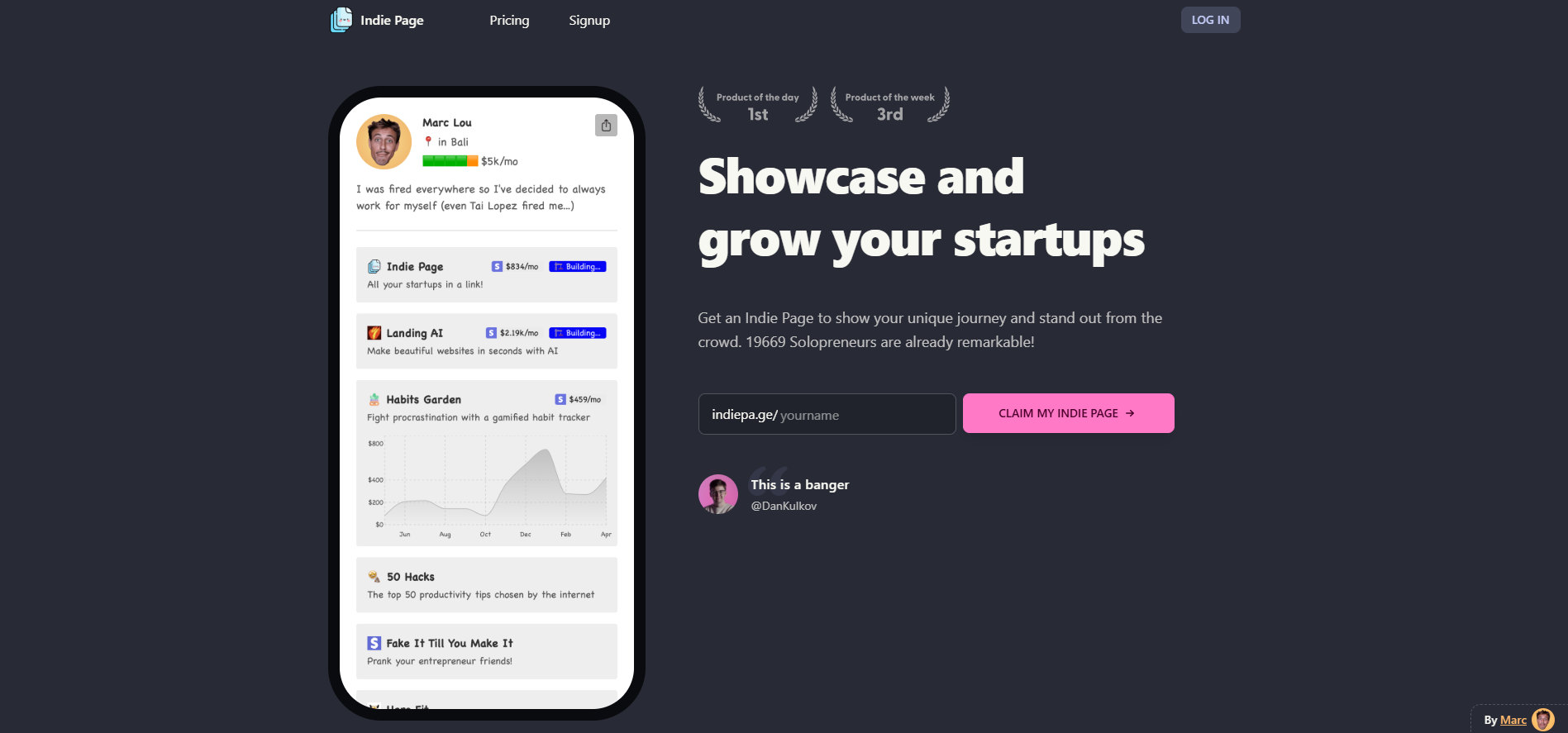
IndiePage is a "Link in Bio" tool designed specifically for indie hackers, solopreneurs, and makers. Unlike generic alternatives like Linktree, IndiePage focuses on displaying products with verified revenue badges. Key features include Stripe/LemonSqueezy integration for real-time MRR display, leaderboard gamification, and newsletter integration with Substack and Beehiiv. Pricing is refreshingly simple: a one-time payment of ~$25 for 1 year or ~$45 for lifetime access. Verdict: If you're a solopreneur with multiple projects, IndiePage is a no-brainer. The lifetime deal cost is likely less than the value of a single converted customer, and verified revenue builds instant authority.
IndiePage Review: The Ultimate Showcase for Solopreneurs & Makers
In the fast-paced world of digital entrepreneurship, "Building in Public" isn't just a hashtag-it's a marketing strategy. However, for serial makers who ship multiple projects a year, managing a cohesive portfolio can be a nightmare. You have a SaaS here, a newsletter there, and a Gumroad product somewhere else.
This is where IndiePage enters the chat. It promises to be the definitive hub for solopreneurs to showcase their work, build trust through transparency, and gamify the startup journey. But is it worth the hype (and the price)?
In this review, we'll break down exactly what IndiePage offers, who is behind it, and why it might be the missing piece of your personal branding stack.
IndiePage is essentially a "Link in Bio" tool on steroids, specifically designed for indie hackers, solopreneurs, and makers. Unlike generic alternatives like Linktree, IndiePage is built to display products, not just links.
It allows creators to aggregate all their startups onto a single, aesthetically pleasing page. However, its standout feature is "Verified Revenue." By connecting directly to Stripe or LemonSqueezy, IndiePage pulls your actual revenue numbers to display a "Verified" badge next to your projects.
According to data from Forbes, 74% of people trust a person more than a brand. IndiePage leans heavily into this statistic, providing the social proof necessary to turn casual Twitter followers into customers.
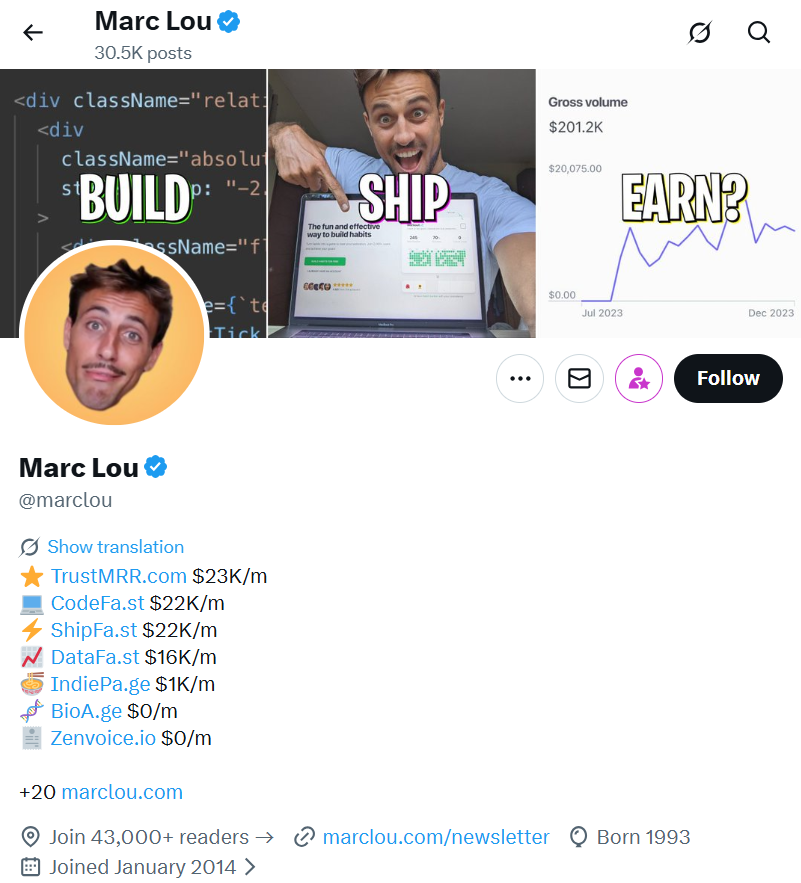
Trust in a SaaS product often stems from who is building it. IndiePage was created by Marc Lou, a well-known figure in the "Build in Public" community.
Marc is famous for shipping over 20 startups in two years. He built IndiePage because he needed it himself-a central station to house his portfolio (which includes ShipFast, ZenVoice, and ByteDispute). Because the tool is built by a maker for makers, the UX focuses strictly on what matters: speed, aesthetics, and conversion.
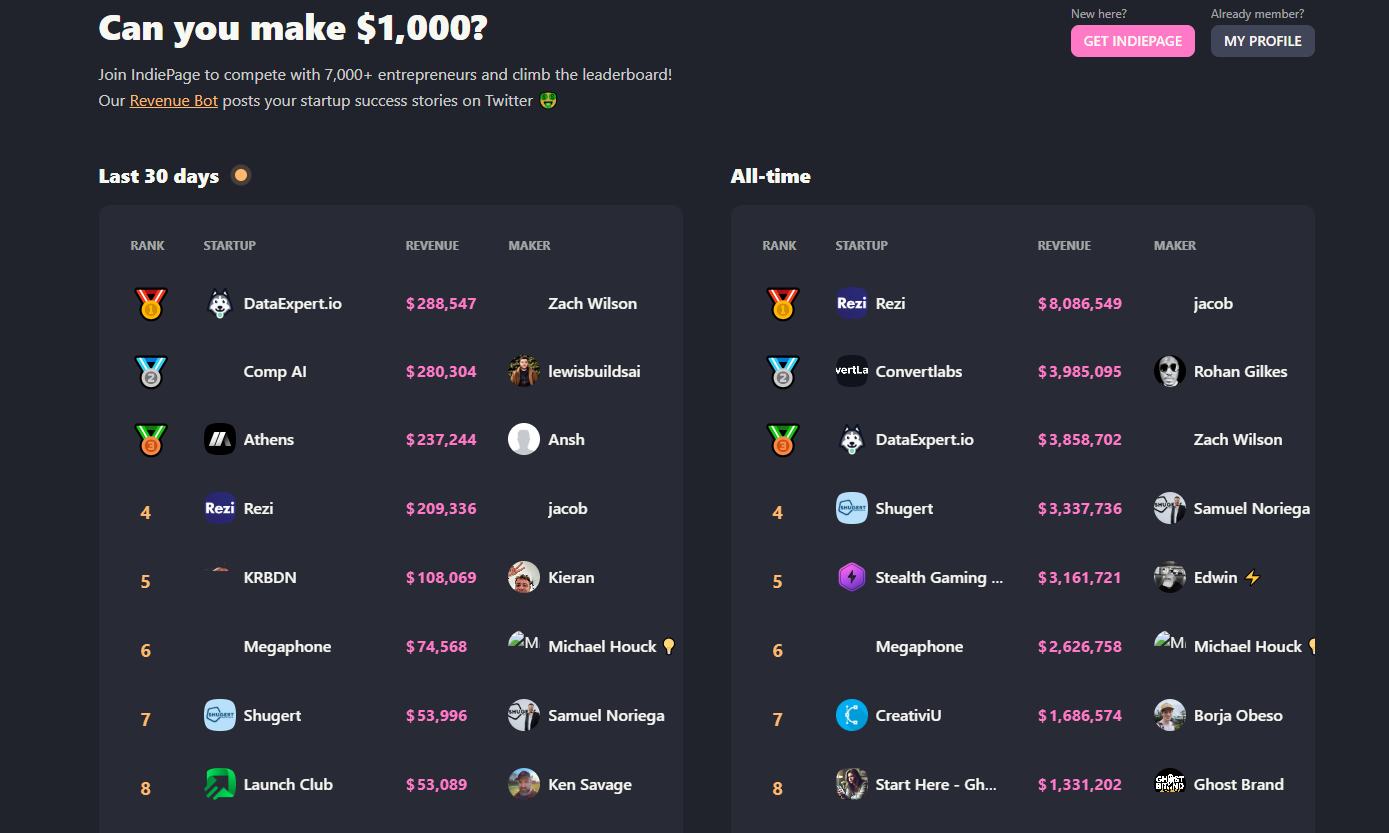
While the interface is simple, the backend features are powerful for personal branding:
- Verified Revenue Badges: This is the Unique Value Proposition (UVP). You can connect your Stripe or LemonSqueezy accounts to show real-time MRR (Monthly Recurring Revenue). In the world of SaaS, verified revenue is the ultimate trust signal.
- The Leaderboard & Revenue Bot: IndiePage gamifies entrepreneurship. Users can compete on the IndiePage Leaderboards for visibility. Additionally, the IndiePage Revenue Bot can automatically tweet your revenue milestones, automating your marketing.
- Newsletter Integration: You can collect emails directly from your profile. It integrates seamlessly with Substack and Beehiiv, allowing you to own your audience rather than renting it from social media platforms.
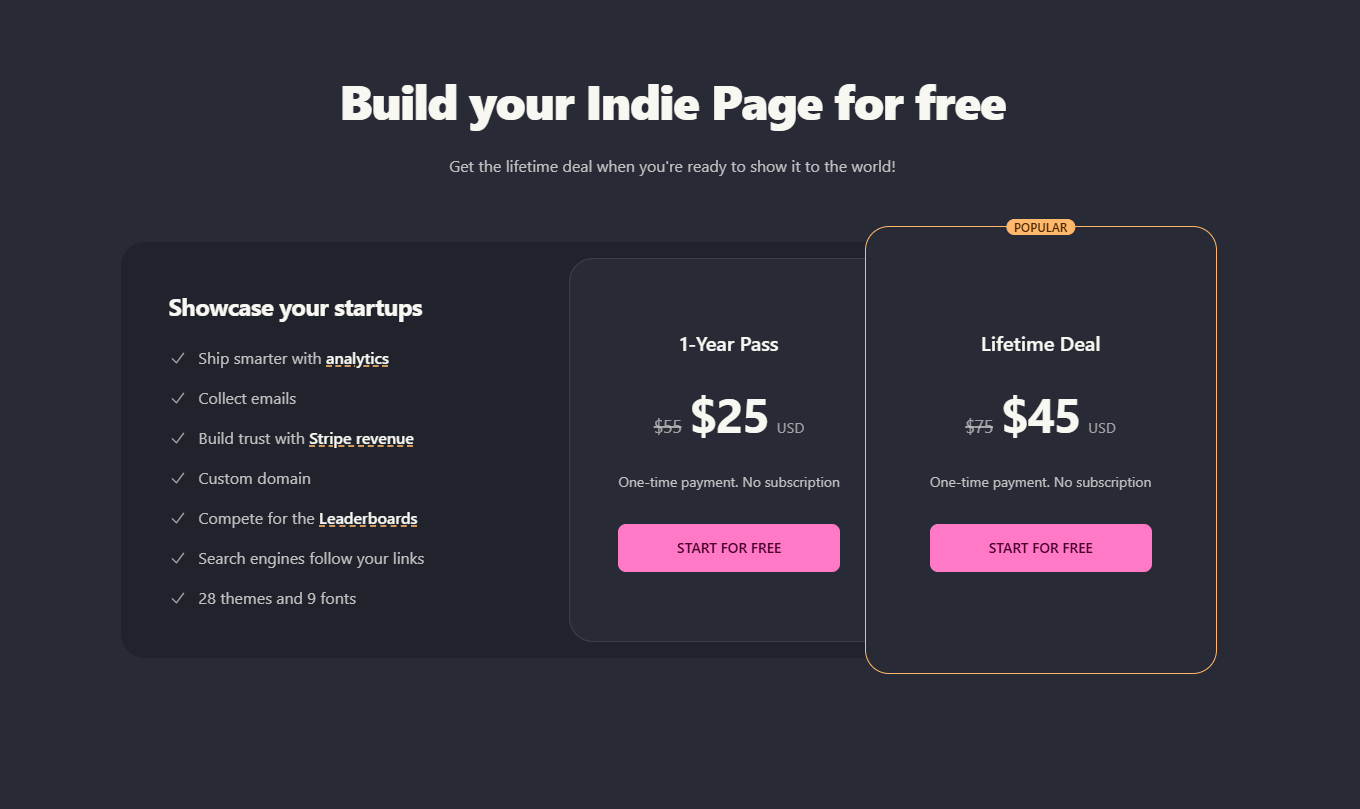
IndiePage offers a refreshing departure from the subscription fatigue most SaaS founders feel. They operate on a One-Time Payment model (Lifetime Deal).
- 1-Year Pass: ~$25 USD (One-time payment for 12 months).
- Lifetime Deal: ~$45 USD (One-time payment, forever).
Note: Prices often fluctuate based on active sales, but the core promise is "No Subscriptions."
How does IndiePage stack up against the rest?
- Linktree: The industry standard. It's free and robust, but it looks generic. It lacks revenue verification and the specific "product showcase" layout that makers need.
- Bento: A beautiful, grid-based link tool. While Bento is visually stunning, it is a generalist tool for designers and developers, lacking the specific "startup revenue" integrations IndiePage offers.
- Polywork: More of a professional network than a portfolio. It is great for finding work, but less effective for selling SaaS products directly to an audience.
If you are a solopreneur with more than one project, IndiePage is a no-brainer. The cost of the Lifetime Deal is likely less than the value of a single converted customer.
The ability to display verified revenue builds instant authority, and the leaderboard feature provides free organic traffic to your projects. It is the best way to consolidate your digital footprint into a professional, high-converting portfolio.
Now that you've set up your IndiePage, showcased your verified revenue, and started driving traffic to your various SaaS projects, you have a new problem to deal with: Payment Disputes.
As your startups grow (as seen on your new IndiePage leaderboard ranking), you become a target for trial fraud and chargebacks. Seeing that revenue number drop because of "friendly fraud" is painful.
This is where 1Capture becomes essential.
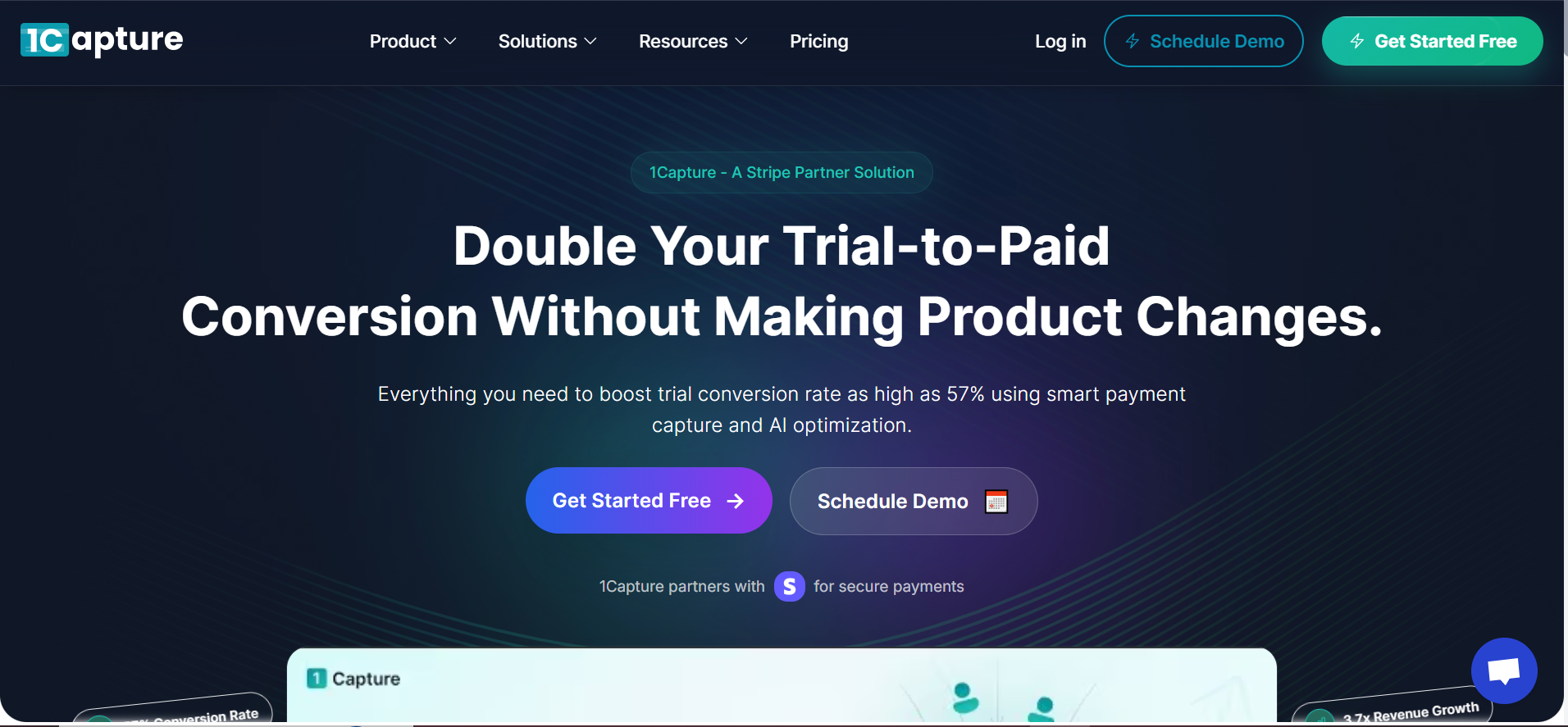
- 5-Minute Setup: Just like IndiePage, we value your time. Connect your Stripe account in minutes with no code required.
- Stop "Serial Disputers": We analyze purchasing behavior to block bad actors who have a history of requesting chargebacks, protecting your merchant health.
- Smart Charge Technology: We utilize pre-authorization checks to ensure funds are available before a transaction clears, significantly reducing failed payments.
Don't let chargebacks ruin the beautiful revenue graph on your IndiePage. Protect your verified revenue with 1Capture or learn more at the 1Capture Blog.