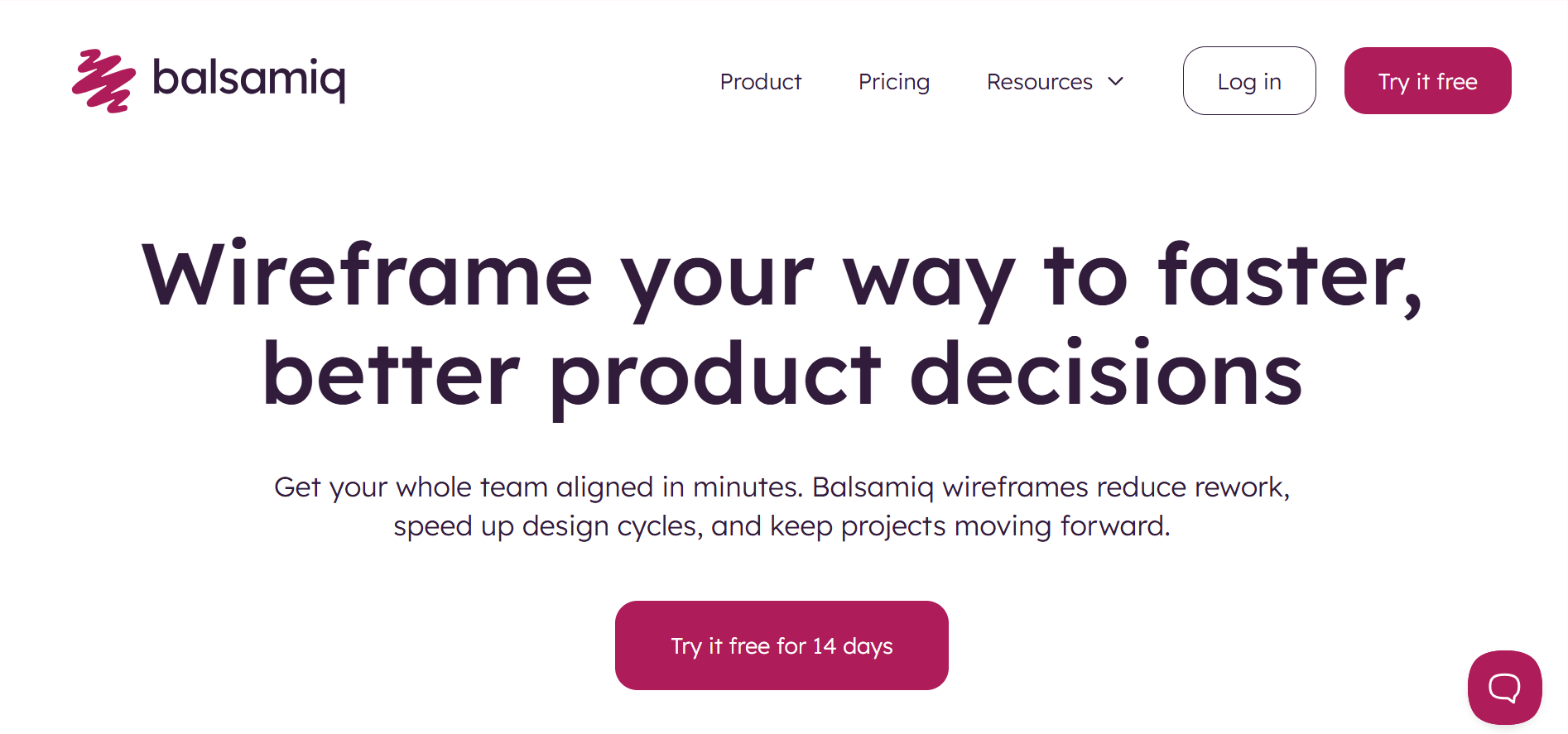
Balsamiq is a rapid wireframing tool that reproduces the experience of sketching on a whiteboard using a computer. Founded in 2008 by Peldi Guilizzoni (former Adobe engineer), it's intentionally "low-fidelity" with squiggly lines and handwritten-looking fonts to encourage honest feedback and rapid iteration. Key features include drag-and-drop simplicity with pre-built UI components, sketch-like "skin" that keeps focus on functionality over aesthetics, and keyboard shortcuts optimized for speed. Pricing ranges from ~$12/month (2 projects) to ~$399/month (400 projects) for cloud-based version. Verdict: If you're a Product Manager, Founder, or Developer who needs to communicate an idea fast, Balsamiq is unbeatable. It strips away distractions and forces you to think about the user journey, potentially shaving weeks off your development cycle.
Balsamiq Review: The Quickest Way to Wireframe for Product Teams
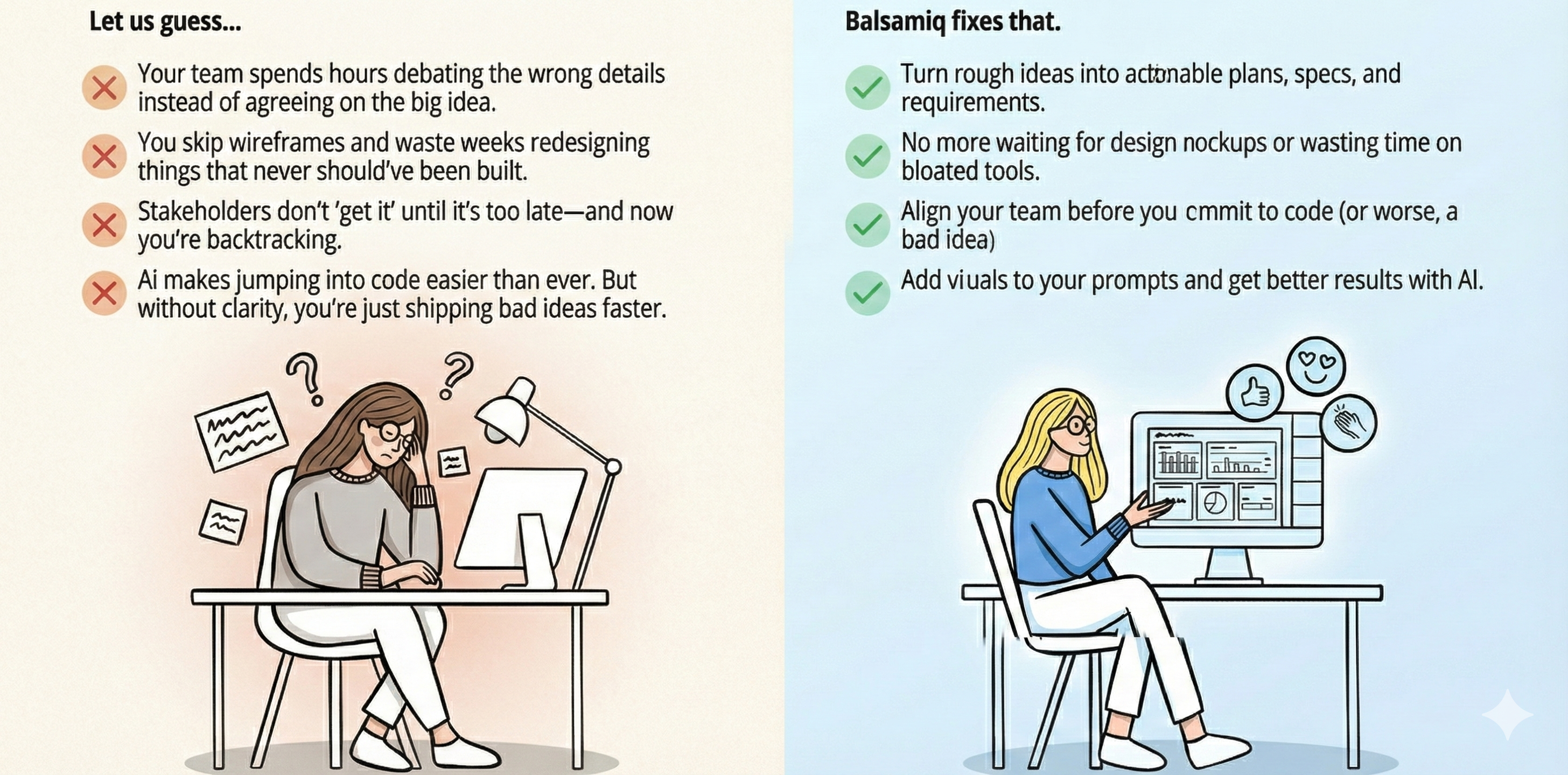
In the fast-paced world of SaaS development, "analysis paralysis" is a project killer. Teams often get bogged down in debates over button colors and font choices before they've even agreed on the core user flow.
Enter Balsamiq.
Unlike modern design tools that aim for pixel-perfect realism, Balsamiq doubles down on rough, low-fidelity sketching. It forces your team to focus on structure and content rather than aesthetics. But in a world dominated by Figma, does a digital whiteboard that mimics a sketchpad still have a place?
In this review, we'll break down Balsamiq's unique value proposition, its pricing, and why it remains a secret weapon for product managers and founders.
Balsamiq is a rapid wireframing tool that reproduces the experience of sketching on a whiteboard, but using a computer. It is designed to be intentionally "low-fidelity." The lines are squiggly, the fonts look handwritten, and everything feels rough.
This is a feature, not a bug. By looking unfinished, Balsamiq wireframes encourage honest feedback and rapid iteration. Stakeholders aren't afraid to critique a drawing that looks like it took five minutes to make, whereas they might hesitate to tear apart a polished high-fidelity mockup.
Balsamiq was founded in 2008 by Peldi Guilizzoni, a former senior engineer at Adobe. Peldi famously built the first version of Balsamiq to solve his own frustration: he wanted a tool that was as fast as a pencil but smarter than paper.
His philosophy-"Life's too short for bad software"-has guided the company for over 15 years. Balsamiq is a rare example of a tech company that has remained bootstrapped, profitable, and intentionally small, focusing purely on solving one problem exceptionally well rather than chasing venture capital growth at all costs.
- Drag-and-Drop Simplicity: You don't need to be a designer to use it. The interface is packed with pre-built UI components (buttons, text inputs, maps, charts) that you just drag onto the canvas.
- Sketch-Like "Skin": The tool's signature look mimics a hand-drawn sketch. This psychological trick keeps conversations focused on how it works (functionality) rather than how it looks (visual design).
- Keyboard Shortcuts & Speed: Power users love Balsamiq because it is optimized for speed. With "Quick Add" and robust keyboard shortcuts, you can wireframe a complex dashboard in minutes, not hours.
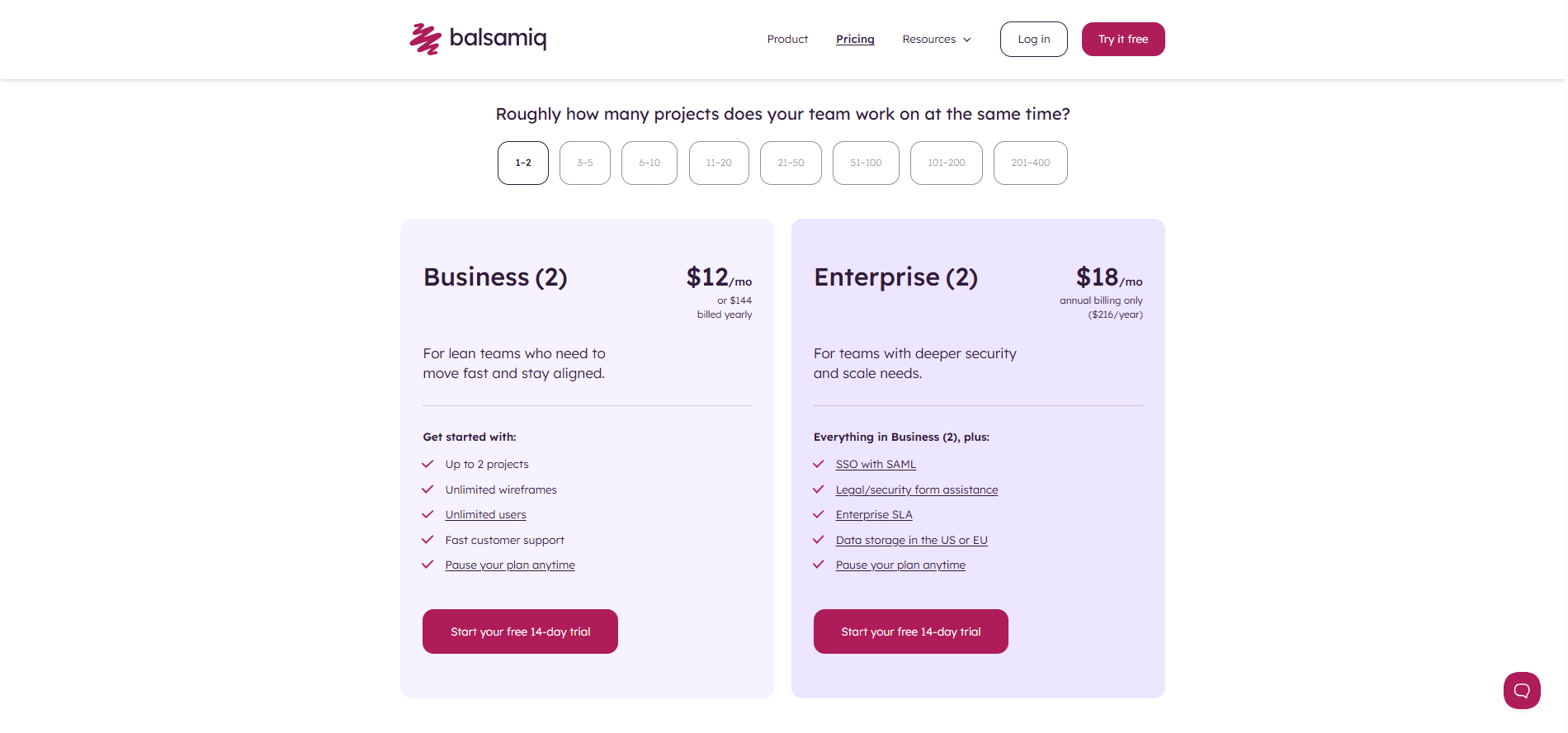
Balsamiq offers a straightforward pricing model for its cloud-based version ("Balsamiq Cloud"), which is ideal for remote teams:
- 2 Projects: ~$12 / month
- 20 Projects: ~$49 / month
- 200 Projects: ~$199 / month
- 400 Projects: ~$399 / month
They also offer a desktop version for those who prefer working offline or need a one-time license model, though the industry is shifting largely toward the cloud subscription.
- Figma: The industry standard for interface design. While powerful, it encourages high-fidelity design early on, which can slow down the initial ideation phase.
- Miro: A digital whiteboard that is great for brainstorming but lacks the specific, pre-built UI components that make Balsamiq so fast for wireframing.
- Axure RP: A robust tool for complex, interactive prototypes. It is significantly more expensive and has a steeper learning curve than Balsamiq.
If you are a Product Manager, Founder, or Developer who needs to communicate an idea fast, Balsamiq is unbeatable.
It strips away the distractions of modern design tools and forces you to think about the user journey. While you will eventually move to Figma for the final polish, starting in Balsamiq can shave weeks off your development cycle by ensuring everyone agrees on the blueprint before a single pixel is polished.
Balsamiq helps you build your product faster by removing friction from the design process. But once your SaaS is built and live, you face a new type of friction: Revenue Loss.
As you scale your new product, you will inevitably encounter payment failures, card testing attacks, and "friendly fraud" chargebacks. These are the silent killers of SaaS growth.
Just as Balsamiq provides a structure for your design, 1Capture provides a safety structure for your Stripe payments.
1Capture is a Stripe-partnered revenue recovery tool designed to stop fraud before it happens and recover lost revenue automatically.
Why SaaS Teams Need 1Capture:
- Block "Serial Disputers": Instantly identify and block users who have a history of abusing trial periods or filing fraudulent disputes.
- Smart Charge Technology: 1Capture uses intelligent pre-authorization to verify funds before a transaction clears, preventing failed payments and inventory loss.
- 5-Minute Setup: Like Balsamiq, it requires zero complex engineering. You can integrate it with your Stripe account in minutes.
Don't let bad payments undo your good design work. Secure your revenue stack with 1Capture's Smart Charge and keep your business growing. Learn more at the 1Capture Blog.